Lead Nurturing That Doesn’t Bore. How to Design Educational Sequences That Shorten the Sales Cycle


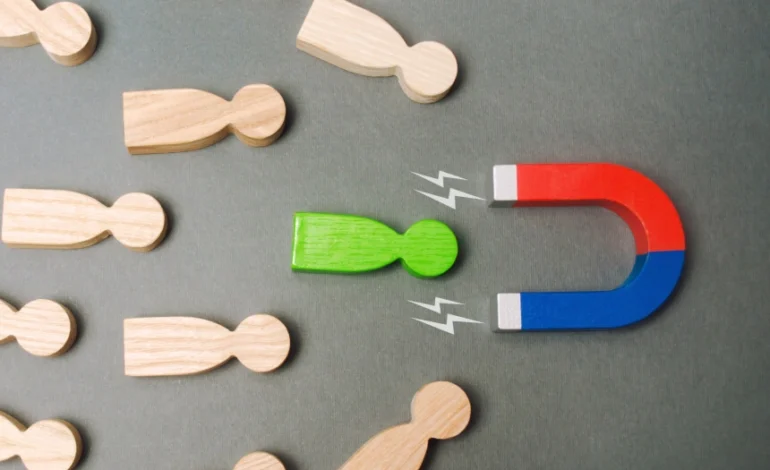
Lead nurturing means systematically delivering content tailored to each lead’s stage in the buyer’s journey until they are sales-ready. Good nurturing doesn’t push hard sales. It educates, addresses specific friction points, and builds trust.
The problem? Most companies get it wrong. They blast identical emails to every single lead, regardless of industry, persona, or funnel stage. The outcome is predictable: leads unsubscribe, sales gets cold contacts, and the sales cycle drags on.
In this article, I’ll show you how to design educational sequences, leverage automatic lead qualification, and measure whether your nurturing is actually driving shorter sales cycles and higher conversion rates.
What Lead Nurturing Actually Is (And Why Most Companies Get It Wrong)
Lead nurturing is guiding a lead through successive stages toward a purchase decision… using content that actually answers their questions (not the ones your sales team wants to answer).
I see 3 major mistakes here:
- Zero segmentation: Running a single one-size-fits-all scenario for all leads. This makes no sense because different industries and stakeholders have completely different pain points.
- Ignoring the funnel stage: Sending an early-stage lead the exact same messages as someone who has already sat through a product demo.
- No lead scoring or sales alerts: Failing to flag when a lead has crossed a point threshold and is ready for a sales conversation. This is the critical window you need to catch immediately.
No wonder 53% of B2B marketers are unable to hit their pipeline goals (Salesgenie, 2026).
“My main warning is against confusing nurturing with a broadcast schedule. It’s easiest to blast a campaign to everyone, but leads at different stages need a completely different conversation.”
— Jakub Wyciślik, Marketing Automation Expert, iPresso.
Why the B2B Sales Cycle is Lengthening—And How Nurturing Shrinks It
The B2B sales cycle is growing. The median sales cycle stands at 84 days (as of June 2026), a 22% increase since 2022 (Optifai Pipeline Study).
More stakeholders need to sign off on a purchase—which means more people need to be educated. If your company doesn’t provide educational content early on, your competitors or random online sources will.
Fortunately, lead nurturing powered by effective educational workflows addresses the questions of these various stakeholders ahead of time. So, by the time the purchase topic reaches the board meeting, most objections have already been cleared.
How to Design an Educational Sequence Step-by-Step
Step 1: Define the Sequence Goal
Every sequence must have one specific goal—moving the lead to the very next stage. Avoid vague goals like “sales.” Aim for concrete micro-conversions like “book a demo” or “download a case study.”
Narrow goal = easier to measure and easier to design content for.
Step 2: Map the Buyer’s Journey Stages
Start with the classic framework (Awareness $\rightarrow$ Consideration $\rightarrow$ Decision), but in B2B, you must add Internal Validation—the moment your primary contact has to convince others within their organization.
This is where most leads are lost because companies typically stop delivering content right after the demo or sales call.
Step 3: Match Content to the Funnel Stage
Educational content in a B2B sales funnel must answer a different question at every single step:
- Problem Awareness: Expert articles, industry data, short videos.
- Consideration of Solutions: Comparison guides, webinars, ROI calculators.
- Purchase Decision: Case studies, customer reviews, product deep-dives.
- Internal Validation: Ready-to-share collateral (summarized decks, feature comparison sheets, cost-benefit analyses).
Step 4: Establish the Schedule
Behavioral triggers are far more effective than rigid time schedules. For example, the third email should only fire after the lead has opened email number two. For standard educational sequences, spacing touches out by 3 to 5 business days is usually the sweet spot. It’s short enough to keep momentum alive, but long enough to avoid feeling like spam.
You can easily set up these behavioral triggers using marketing automation workflows.
Step 5: Test and Optimize
I usually recommend setting a checkpoint after 3 weeks: analyze your open rates, CTR, and funnel velocity. If you see high open rates but zero movement down the funnel, your subject lines are fine, but your content mapping is off.
Note: Only test one variable at a time (e.g., subject line, send time, or CTA type). Combining multiple variables makes it impossible to draw accurate conclusions.
Example: A Nurturing Sequence for Webinar No-Shows
Here is a real-world workflow example we recently built for a client. A lead signed up for a marketing automation webinar but didn’t show up. The automated sequence looks like this:
- Webinar Day: An email with the recording link and one key takeaway summarized in the body text.
- Day 3: If the lead opened the recording $\rightarrow$ send a case study related to the webinar topic. If they didn’t open it $\rightarrow$ send a reminder with a different angle/subject line.
- Day 7: A short, punchy article diving deeper into one specific problem highlighted during the webinar.
- Day 12: An invitation to book a demo (if the lead engaged with previous touches) OR move them to a longer-term educational nurture track (if they remained inactive).
This is a straightforward marketing automation scenario with just two branches, yet it perfectly highlights the difference between behavioral automation and a generic blast.
Lead Scoring: How to Automatically Qualify Leads
Lead scoring is a mechanism that assigns points to a lead based on two data sets: demographics (job title, industry, company size) and behavior (email opens, site visits, content downloads). The cumulative score determines when a lead transitions from a Marketing Qualified Lead (MQL) to a Sales Qualified Lead (SQL).
“Points-based scoring only works when you combine demographic data with behavior. The mere fact that someone opened an email tells you nothing about their intent. It’s the combination of signals—returning to the pricing page, watching a demo video, clicking a case study from their specific industry—that proves a lead is ready for a sales rep.”
— Jakub Wyciślik, Marketing Automation Expert, iPresso.
A practical rule of thumb: A single action should never automatically qualify a lead for sales. It’s all about the combination of signals over a specific timeframe. In tools like iPresso, lead scoring connects directly to workflows—the moment a lead crosses your scoring threshold, the system automatically alerts a sales rep, updates the lead segment, and pauses the educational sequence to let a human take over.
Segmentation and Personalization: Different Leads, Different Language
B2B lead nurturing without segmentation is just noise sent to nobody in particular. Your segmentation doesn’t need to be overly complex; three variables are plenty to get started:
- Industry
- Role in the buying committee (a decision-maker wants ROI data; an end-user wants to know how it works day-to-day)
- Funnel stage
In practice, this means building a few variations of the same sequence—same ultimate goal, but different examples and arguments depending on the segment. MarTech platforms like iPresso allow you to automate this: a lead is routed down a specific branch of a scenario instantly based on form data or web behavior, eliminating manual list management.
What to Send, When, and Why: The Role of Content in Nurturing
Content in lead nurturing has a single job: answer the question the lead is asking right now—not what sales wishes they were asking. That’s why mapping content to the funnel stage matters more than sending frequency.
Early on, purely educational content works best—expert insights, market data, and trend reports. In the middle stages, it’s all about comparisons and verification—webinars, tool selection guides, and calculators. In the final stages, you need social proof—data-driven case studies, testimonials, and structured demos.
Storytelling in email marketing outperforms dry feature lists every time, but only if the story drives a clear business conclusion. A case study without numbers is just an anecdote. A case study showing a measurable conversion lift or hours saved is an asset your lead can use to get internal buy-in.
Furthermore, nurturing shouldn’t stop at email. Modern automated campaigns connect email with SMS or WhatsApp—for example, sending a webinar reminder via SMS only to leads who missed the email notification.
Workflows and Automation: A Scenario That Runs on Autopilot
Marketing automation workflows differ from standard email blasts in one major way: they react to user behavior rather than sticking to a rigid calendar. A great workflow features conditional logic—different paths based on whether a lead opened an email, clicked a link, or ignored the touchpoint entirely.
“A good nurturing workflow doesn’t end after the first sequence. It needs branches—if a lead clicks a link to a case study, they should enter a different path than someone who ignored it. Without this, automation is just mass mailing under a fancy name, not true lead guidance.”
— Jakub Wyciślik, Marketing Automation Expert, iPresso.
In practice, a well-designed scenario accounts for at least three paths:
- Active leads: Continue the sequence at an accelerated pace.
- Passive leads: Shift the angle, topic, or content format.
- Sales-ready leads: Route directly to sales via CRM and pause automated marketing emails.
In platforms like iPresso, these scenarios are built visually by connecting conditions, delays, and actions in a single flow, removing the operational headache of manual data handling.
CRM & Marketing Automation Integration: The Foundation of Effective Nurturing
Marketing automation operating without a CRM integration runs completely blind to sales reality. Marketing might see a lead opening five emails, while failing to realize a sales rep already spoke with them last week—and vice versa.
Integrating your CRM with marketing automation solves three distinct pain points:
- No duplicated outreach: A lead actively talking to a rep is automatically excluded from top-of-funnel marketing drips.
- A complete lead history: Sales can see exactly what content a lead consumed before picking up the phone, allowing them to reference specific topics or webinars.
- Closing the data loop: Win/loss data flows back to marketing, making it clear which nurturing sequences and segments generate actual revenue, not just arbitrary engagement metrics.
Without this integration, automated lead scoring loses its anchor. CRM and sales automation should function as a unified ecosystem, not two isolated tools connected by a weekly CSV export.
How to Measure the Success of Your Nurturing Campaigns
Open rates and CTR tell you if your copy is engaging, but they don’t tell you if your nurturing is working. To evaluate the true performance of your nurture tracks, look closer to the bottom of the funnel:
- MQL $\rightarrow$ SQL Conversion Rate: Is the sequence actually qualifying leads, or just generating clicks?
- Funnel Velocity (Time to Sales Hand-off): If this metric is shrinking, your nurturing is doing its job.
- Impact on Average Contract Value (ACV): Leads who go through a structured educational track typically make more informed, higher-tier purchase decisions.
- Nurture Attribution: What percentage of closed-won deals engaged with a nurturing sequence at some point in their journey?
A common pitfall is optimizing for vanity metrics because they are easy to lift (like forcing open rates at the expense of target audience relevance). It is always better to have a sequence with a lower open rate but a significantly higher conversion rate to SQL.
The Role of AI in Modern Lead Nurturing
AI in marketing automation doesn’t replace your nurturing strategy—it accelerates execution. Here are three areas where artificial intelligence is fundamentally changing the game for marketing teams:
- Predictive Lead Scoring: Machine learning models analyze historical data to identify behavioral patterns that lead to conversions much faster than manual, rule-based scoring setups.
- Send-Time Optimization (STO): AI determines the optimal deployment time for each individual recipient based on their historical engagement patterns, moving away from uniform blast times.
- Dynamic Content Generation: Rapidly spinning up variations of a single message tailored to different segments while maintaining strict brand consistency.
In iPresso, AI handles heavy reporting lifting via the MAiA assistant, cutting down campaign performance analysis from hours to minutes without requiring manual spreadsheet parsing.
FAQ
What’s the difference between lead generation and lead nurturing?
Lead generation is the act of acquiring contacts—via forms, ad campaigns, or webinar registrations. Lead nurturing starts right after: it is the ongoing process of educating and qualifying those acquired leads until they are fully ready to speak with a sales representative. Without nurturing, the majority of your generated leads simply go cold.
How many emails should a nurturing sequence have?
There is no magic number; it depends on your average sales cycle length and product complexity. In B2B, educational sequences typically consist of 4 to 8 emails spread across 3 to 6 weeks, with extensions triggered if a lead remains highly engaged but hasn’t yet hit the sales-ready scoring threshold.
How long does an effective B2B lead nurturing campaign last?
It should match your customer’s decision-making cycle—which in B2B frequently spans months, not weeks. Given that nearly half of all conversions happen 90+ days after the initial touchpoint, two-week nurture tracks systematically leak leads who simply required more time to evaluate.
Does lead nurturing only work in B2B?
No, but it is most vital in B2B due to extended sales cycles and multi-stakeholder buying committees. Nurturing is highly effective in B2C as well, though those sequences are generally shorter and rely more on promotional incentives than deep educational content.
How do I start with lead nurturing without a big team?
Start with a single sequence dedicated to your highest-value lead segment, rather than trying to map the entire customer journey at once. Select a single trigger (like a high-intent resource download), build a 4 to 5-email workflow, and set up one basic scoring threshold for sales hand-off. A solid marketing automation platform lets you deploy this without needing developers or an enterprise content team.
Design a Nurturing Strategy That Shrinks Your Sales Cycle
If you want to see what a tailored nurturing sequence looks like for your specific sales funnel, fill out our brief questionnaire. We’ll map out how to approach segmentation, scoring, and workflows for your business case. Alternatively, you can book a free iPresso demo right now to see how easy it is to build these automated scenarios in real-time.